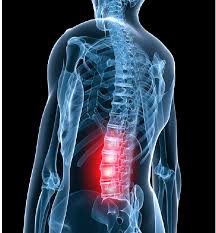
 Between most vertebrae, the bones in the spine, is a sponge like disc. When we are upright or bending over we increase the pressure on the disc and very slowly squeeze the water from the tissue in the discs. When we lay down the reverse happens and the water is sucked back into the disc.
The sustained pressure on the disc causes a loss of fluid, amounting to a 10% loss in disc height. The fluid loss means an individual is 1 – 2% shorter at the end of the day and the loss is made up during sleep when the discs are re-hydrated due to osmotic pressure. The average daily change in human stature is about 19mm. In effect, the discs swell during the night and are compressed during the day. So if you want to feel taller, measure your height in the first hour of the morning, before the weight of the day compresses you.
The time of day affects not only the water content of the disc, and disc height, but this in turn affects spine flexibility. As the disc fills with water it gets stiffer. As the disc loses height it gets more flexible and less prone to injury. (McKenzie, The Lumbar Spine: Mechanical Diagnosis and Therapy, 2003)
In conclusion: there is an increased risk of damage to the discs of the back with bending forward in the early morning. Research shows that 1/4 of all low back injuries happen in the first hour of the day.
In other words, it is wiser to get up slowly and let your body warm up and compress a bit before you stretch or lift anything heavy. I suggest a 15 minute walk to loosen up before you stretch forward to touch your toes or get really active. Stretching is good but you are better off doing your stretches later in the day or before you go to bed rather than first thing in the morning. It is not advisable to wake up and do aggressive stretches before getting out of bed. This little bit of advice could help prevent 1/4 of low back injuries. Take it easy, at least for the first hour in the morning and save your back.

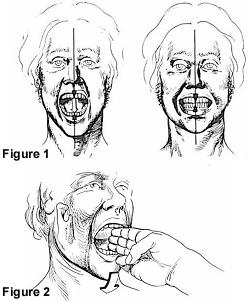


 There is a subpopulation of hypertensive (high blood pressure) patients that have ‘neurogenic hypertension’. Neurogenic hypertension is caused by nerve irritation due to dysfunction and mal-position of the upper cervical vertebrae.
 Low back pain is one of the most common pain conditions in the older population (70 – 100 years of age) and a major cause of disability. It may exert a major impact on the daily lives of sufferers. An active lifestyle consisting of regular (once a week or more) long walks, bicycling, gardening, dance, gym and/or other exercise significantly reduces the risk of seniors developing low back pain.

Buttock trigger points
May 23, 2014 by manager • Newsletters
Buttock and Leg Pain is most commonly caused by joint dysfunction (abnormal motion) of the joints of the low back, pelvis and hips. Restoring the function (normal motion pattern) eliminates the pain. Functional problems are called syndromes. They are correctable because disease and pathology are not the cause of the pain.
Dysfunction of the muscles (myofascial trigger point pain syndromes) that attach to and move the joints of the low back, pelvis and hips can also cause low back, buttock and leg pain. Each dysfunctional muscle has a characteristic area of enderness, tightness and referral pain pattern. You will note from the examples below that there is a huge overlap of muscular referral pain patterns so the pain pattern alone is not enough to make a diagnosis.
To read more of this newsletter Click Here